Tigrinya Greetings for Beginners
Learn simple greetings like hello, how are you, and common phrases you will hear often.
By MesobLingo Team · 4 min read · Updated May 2026
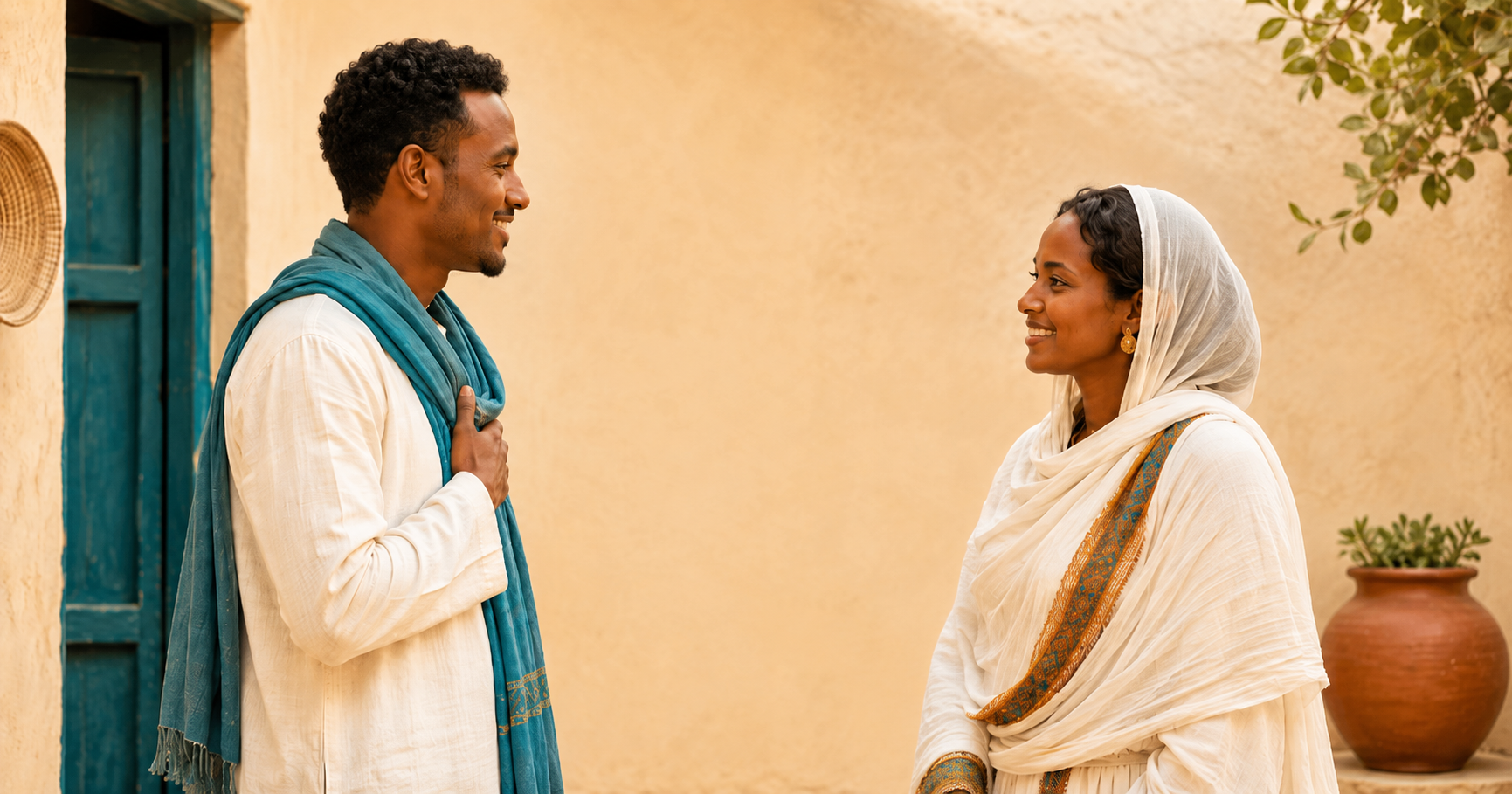
Tigrinya greetings are one of the best places to start if you are new to the language.
You do not need a huge vocabulary to make your first real connection. Sometimes one word is enough.
Selam means hello. It also carries the idea of peace. That may look small, but it matters. If you grew up around Tigrinya speakers, you have probably heard it at home, at church, at community events, or when relatives walk into the room.
Start there.
Start with Selam
The easiest Tigrinya greeting to learn is:
| English | Tigrinya | When to use it |
|---|---|---|
| Hello | Selam | Anytime, with almost anyone |
Selam is simple, flexible, and safe for beginners. You can use it with family, friends, elders, and people in the community. It works as a basic hello, and it is usually the first greeting beginners should memorize.
Use it out loud. Do not just read it.
Hear the rhythm. Repeat it a few times. Let your mouth get used to it. That is how Tigrinya starts to feel less far away.
How to say "How are you?" in Tigrinya
This is where Tigrinya gets more interesting.
In English, "How are you?" stays the same. In Tigrinya, it changes depending on who you are speaking to.
| English | Tigrinya | Use it when speaking to |
|---|---|---|
| How are you? | Kemey aleka? | A male |
| How are you? | Kemey aleki? | A female |
This part trips people up.
If you are speaking to a man, use:
If you are speaking to a woman, use:
The difference is small, but native speakers notice it. For beginners, do not overthink the grammar yet. Just learn the pair together.
Aleka for male. Aleki for female.
Say both out loud until the difference feels natural.
A simple Tigrinya greeting conversation
Here is a basic greeting you can practice:
| Speaker | Tigrinya | English |
|---|---|---|
| Person 1 | Selam | Hello |
| Person 1 | Kemey aleka? | How are you? (to a male) |
| Person 2 | Dehan iye | I am fine |
| Person 2 | Yekenyeley | Thank you |
If you are speaking to a female, change Kemey aleka? to:
That is already a real conversation. It is short, but it gives you the foundation.
Practice these greetings with audio
Short beginner Tigrinya lessons built for real daily practice.
How to respond when someone asks how you are
A simple beginner response is:
| English | Tigrinya |
|---|---|
| I am fine | Dehan iye |
| Thank you | Yekenyeley |
| Thanks to God | Ezgher Yimesgen |
You may hear Ezgher Yimesgen often. It means "Thanks to God," and it is a common response in many Tigrinya speaking homes and communities.
For a beginner, Dehan iye is easier to start with. Say:
That means: I am fine. Simple. Useful. Real.
How to say thank you in Tigrinya
The beginner friendly way to say thank you is:
| English | Tigrinya |
|---|---|
| Thank you | Yekenyeley |
Use Yekenyeley when someone helps you, answers your question, gives you something, or corrects your Tigrinya.
If you are a heritage learner, this word may already sound familiar. You may have heard it from parents, grandparents, elders, or relatives. Now you know what it means and when to use it.
How to say goodbye in Tigrinya
Goodbye can also change depending on who you are speaking to.
| English | Tigrinya | Use it when speaking to |
|---|---|---|
| Goodbye | Dehan kun | A male |
| Goodbye | Dehan kuni | A female |
To a male:
To a female:
Do not worry if it feels strange at first. Tigrinya uses these patterns often. The more you hear them, the easier they become. Start by learning each phrase as a full chunk. Not word by word.
Tigrinya greetings for different times of day
Once you know the basics, you can add greetings for morning, afternoon, and evening. These are a little more advanced, so do not start here if you are brand new.
| English | Tigrinya | Use it when speaking to |
|---|---|---|
| Good morning | Kemey hadirka? | A male |
| Good morning | Kemey hadirki? | A female |
| Good afternoon | Kemey wu'elka? | A male |
| Good afternoon | Kemey wu'elki? | A female |
| Good evening | Kemey amsika? | A male |
| Good evening | Kemey amsiki? | A female |
These phrases are not just direct labels like "good morning." They are closer to asking how someone passed the night, day, or evening. That is why greetings in Tigrinya can feel longer and more personal than English greetings.
For now, focus on the core phrases first:
That is enough for a beginner.
Common mistakes beginners make
Using one phrase for everyone
Many beginners learn Kemey aleka? and use it with everyone. That works when speaking to a male, but not when speaking to a female. Learn Kemey aleka? and Kemey aleki? together.
Only reading the words
Tigrinya is not just something to read. You need to hear it. Play the phrase. Repeat it out loud. Say it slowly. Then say it again without looking.
Trying to learn too many greetings at once
Do not start with ten different greetings. Start with four: Selam, Kemey aleka?, Kemey aleki?, Yekenyeley. Once those feel familiar, add goodbye and time-based greetings.
Ignoring respect and elders
Tigrinya greetings are tied to respect. With elders, relatives, and community leaders, the way you greet someone matters. Beginners do not need to master every formal pattern on day one, but you should understand that greetings are not throwaway words. They set the tone.
A simple practice plan
Here is a small practice routine you can use today.
Selam
Say it 10 times out loud.
Kemey aleka?
Use it when speaking to a male.
Kemey aleki?
Use it when speaking to a female.
Yekenyeley
Use it for thank you.
Day 5 — practice the full mini conversation:
Then practice the female version:
Keep it small. That is how the phrases start to stick.
Start practicing Tigrinya greetings
If you are learning Tigrinya as a beginner, do not wait until you know every rule. Start with one greeting.
If you are starting from zero, read our guide on how to learn Tigrinya as a beginner.
That is a real start. Start your first beginner Tigrinya lessons on MesobLingo and practice these greetings with audio.
Ready to keep learning?
Practice Tigrinya greetings with audio and short daily lessons.
Start Tigrinya