How to Learn Tigrinya as a Beginner
Start with greetings, daily phrases, pronunciation, and short sentences you can actually use.
By MesobLingo Team · 5 min read · Updated May 2026
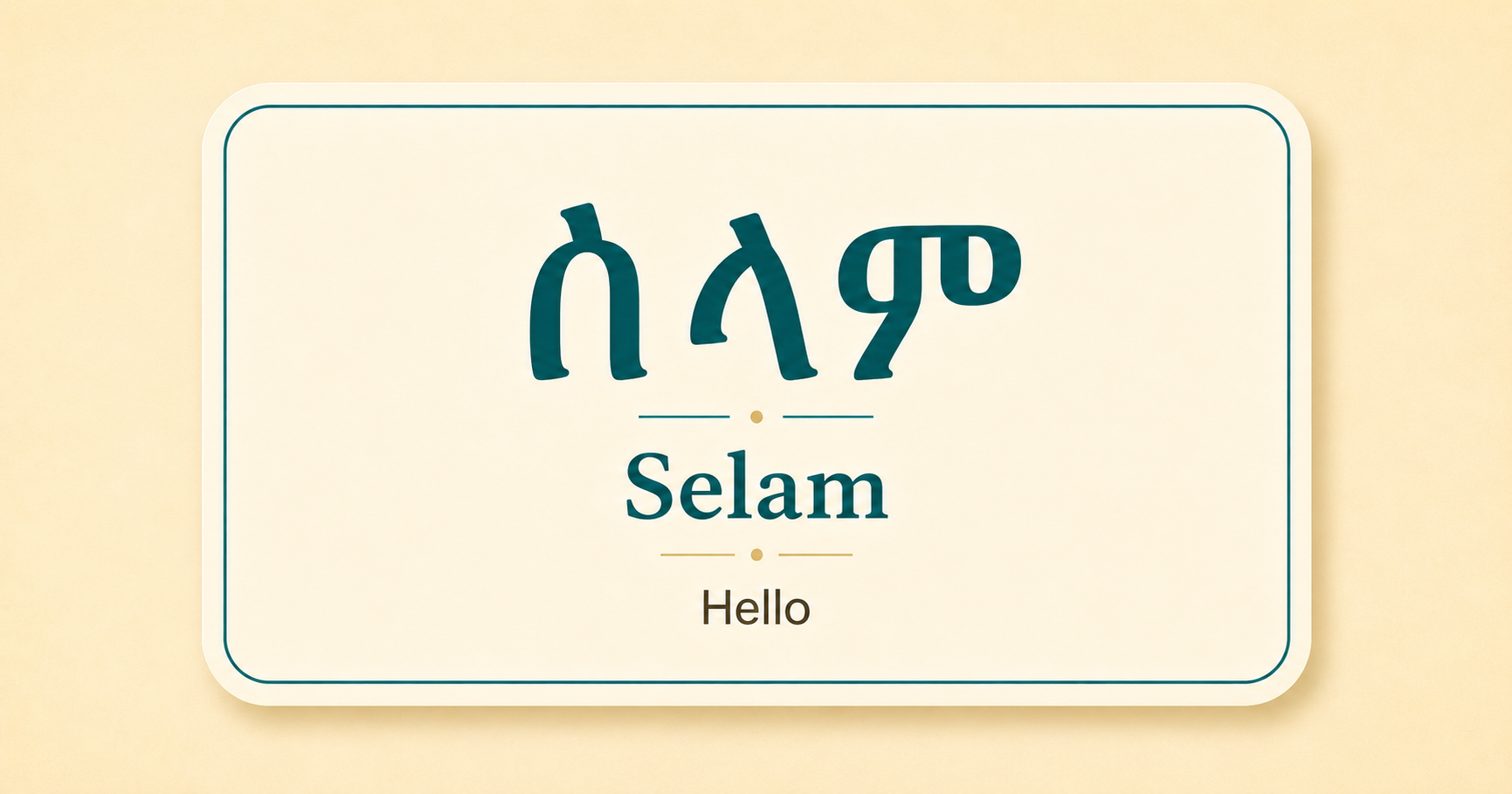
Learning Tigrinya can feel confusing at first.
Not because you are bad at languages. It is usually because most beginners start in the wrong place.
They try to memorize random words. They jump into grammar too early. Or they use translation tools and end up with phrases that do not sound natural.
A better starting point is simple: learn the phrases people actually say. Greetings, daily questions, basic family words, and short sentences will help you build confidence faster than memorizing grammar rules first.
That gives you confidence first. Grammar can come after.
What is Tigrinya?
Tigrinya is a Semitic language spoken mainly in Eritrea and the Tigray region of Ethiopia. It is also spoken by many diaspora communities around the world.
Tigrinya uses the Ge'ez script, also called Fidel.
The script can look intimidating the first time you see it, especially if you grew up reading only English.
But do not treat the script like a gate you have to pass before speaking. You can learn your first few phrases by sound, then come back to the letters once the words feel familiar.
Latin spelling is fine in the beginning. Use it as training wheels while you listen to real audio and get comfortable saying the words out loud.
The goal in the beginning is simple.
Understand basic phrases. Say them out loud. Repeat them often.
Start with Tigrinya greetings
Greetings are the easiest win.
You can use them right away with family, elders, friends, or people in the community. Even one word like Selam can change the tone of a conversation. It shows you are trying, and people usually notice that.
Start with these:
| Tigrinya | Meaning | When to use it |
|---|---|---|
| Selam | Hello | A simple everyday greeting |
| Kemey aleka? | How are you? | When speaking to a male |
| Kemey aleki? | How are you? | When speaking to a female |
This is important because Tigrinya can change depending on who you are speaking to. In English, "How are you?" stays the same. In Tigrinya, the ending can change.
That detail trips up a lot of beginners, especially diaspora learners who heard Tigrinya growing up but never learned the structure behind it.
Best way to learn Tigrinya as a beginner
The best way to learn Tigrinya is to focus on short, useful phrases before heavy grammar. Start with phrases you might actually say in real life:
| English | Tigrinya |
|---|---|
| Hello | Selam |
| How are you? | Kemey aleka? or Kemey aleki? |
| Thank you | Yekenyeley |
| I want coffee | Bun delye |
This is usually better than staring at a long vocabulary list.
A phrase gives you context. You are not just learning a word. You are learning how the word sounds inside a real sentence.
For example, Bun delye means "I want coffee." That one phrase already teaches you something useful about how Tigrinya builds meaning.
In English, you need separate words for "I" and "want." In Tigrinya, that information can be built into the verb. That is one reason the language can feel compact once you start noticing the patterns.
Start your first Tigrinya lesson
Practice beginner Tigrinya phrases with short lessons built for real daily use.
Practice pronunciation early
If you want to learn Tigrinya well, train your ears early. Tigrinya has sounds that English speakers may not be used to. Some sounds are sharper. Some come from deeper in the throat. Some words also sound different depending on stress and rhythm.
Do not panic over this. You do not need perfect pronunciation on day one. But you should listen from the beginning.
Try this simple routine:
- 1Listen to the phrase.
- 2Repeat it slowly.
- 3Play it again.
- 4Say it out loud without looking.
- 5Compare your pronunciation to the audio.
Do not just read silently. Tigrinya needs your ears and mouth involved early.
This is better than staring at words on a page and hoping they stick.
Learn family and daily words
Family words are useful early because they come up often in real conversations. Start with family words you are likely to hear:
| English | Tigrinya |
|---|---|
| Father | Abo |
| Mother | Ade |
| Brother | Haw |
| Sister | Hafti |
These words matter because they show up in real life.
If you are learning Tigrinya for family, travel, or heritage, family words are not random vocabulary. They are part of the conversations you probably care about most.
You are not just studying words.
You are learning how to understand people you may already know.
That matters.
Do not start with heavy grammar
Grammar matters, but it should not be the first wall you run into. If you start with complex verb charts, gender rules, script, and sentence structure all at once, you will probably get overwhelmed. Start smaller.
- Learn greetings.
- Learn family words.
- Learn food words.
- Learn simple questions.
- Repeat short phrases out loud.
Once you know enough phrases, grammar starts to make more sense because you have examples in your head. That is how beginners should learn Tigrinya.
A simple four-week plan to learn Tigrinya
Here is a simple beginner path.
- Selam
- Kemey aleka?
- Kemey aleki?
- Yekenyeley
Say them out loud daily, even if it feels awkward at first.
- Abo
- Ade
- Haw
- Hafti
Then try putting them into tiny phrases, not full complicated sentences.
- I want coffee.
- Where are you going?
- What are you doing?
Now move into the words that show up in normal life: food, places, and basic questions.
- Repeat everything.
- Listen to the same phrases again and again.
Listen to the same phrases again and again. Slow repetition is what makes the language stick.
You do not need a perfect system. You need consistency. Ten minutes a day is better than one long study session once a month.
Common beginner mistakes
Avoid these mistakes if you want to learn Tigrinya faster.
Memorizing random words
Word lists can help, but they are not enough. Learn words inside phrases so you understand how they are actually used.
Ignoring male and female forms
Tigrinya can change depending on who you are speaking to. Learn patterns like Kemey aleka? and Kemey aleki? early.
Waiting until you feel ready to speak
You will not feel ready at first. Say the phrases anyway. That is how confidence builds.
Relying only on translation tools
Translation tools are fine for quick checks. But they should not be your main teacher. Tigrinya has gender, context, and sentence patterns that automated tools can miss. A phrase might be technically close but still sound unnatural. Use verified phrases, native audio, and real practice whenever you can.
Start your first Tigrinya lesson
Do not wait until you feel ready. Start with one phrase today. Learn it, hear it, repeat it, and use it.
That may look small, but it is a real start. Start your first beginner Tigrinya lessons on MesobLingo and practice these phrases with audio.
Ready to keep learning?
Start with simple greetings, daily phrases, and audio practice.
Start Tigrinya