Why Short Daily Lessons Work Better for Tigrinya and Amharic
The science behind micro-learning and how it accelerates retention for language learners.
By MesobLingo Team · 4 min read · Updated May 2026
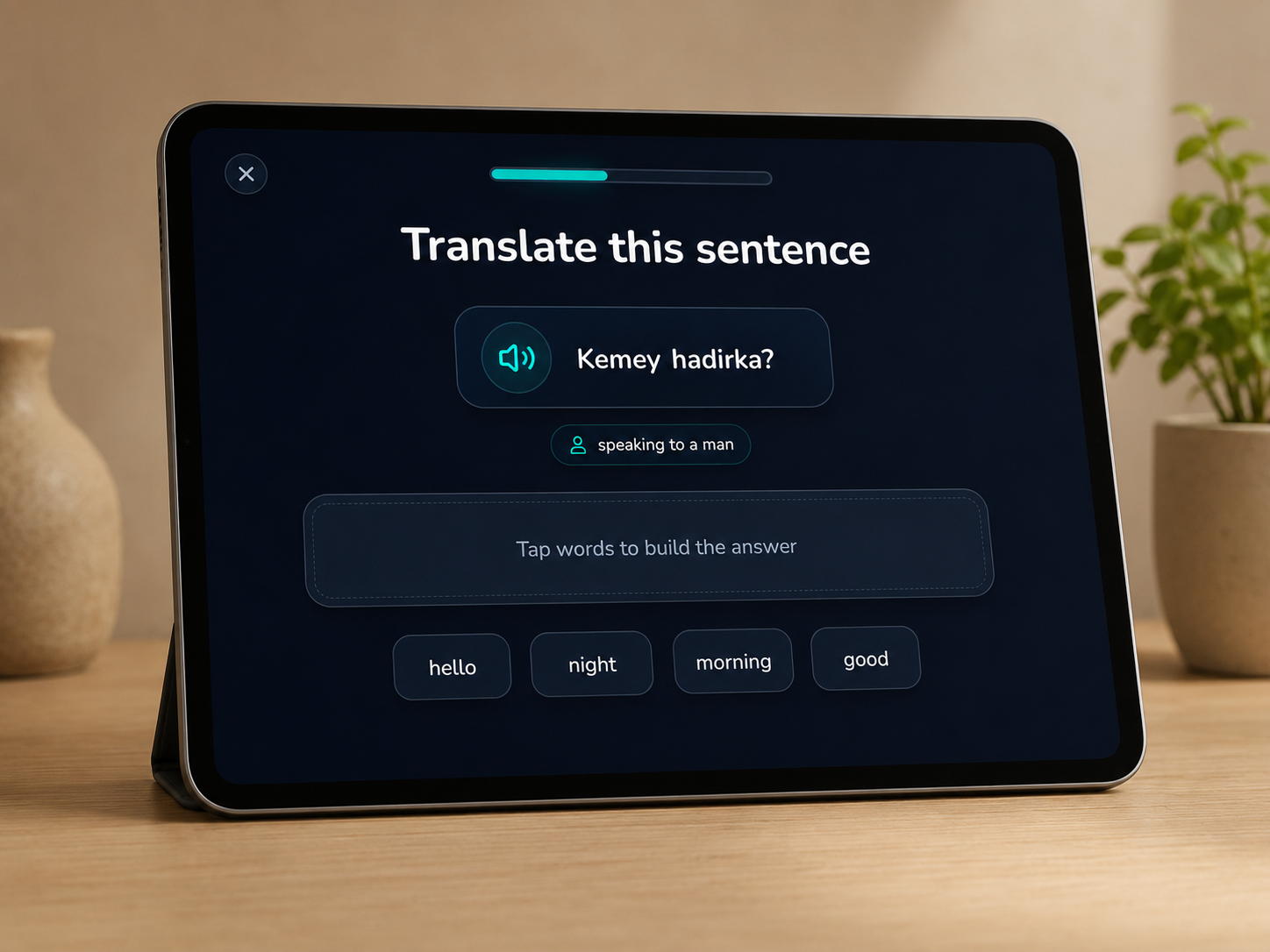
Most people do not fail at language learning because they are lazy.
They fail because their study plan is too big to repeat.
A one hour study session sounds productive. But if you only do it once, it does not help much. Language needs contact. You need to hear the words again. Say them again. Forget a little. Remember again.
That is why short daily language lessons work so well.
They are small enough to start, easy enough to repeat, and strong enough to build a real habit over time.
Long study sessions are easy to skip
Long study sessions feel serious.
That is the problem.
If your plan is to study for one hour, your brain starts negotiating before you even open the lesson.
You start thinking:
I'm tired.
I'll do it tomorrow.
I need a better time.
I already missed yesterday, so what's the point?
That is how people fall off.
A short lesson lowers the pressure. Five or ten minutes feels possible even on a busy day.
That matters because the best study routine is not the one that looks impressive. It is the one you can actually repeat.
Short lessons are easier to repeat
Short lessons work because they remove the biggest excuse.
Time.
Most beginners can find five minutes. Not always thirty. Definitely not always sixty.
That small window is enough to review a greeting, hear a phrase, answer a few questions, or repeat one sentence out loud.
For Tigrinya or Amharic, that could mean:
| Quick lesson | What you practice |
|---|---|
| 5 minutes | One greeting |
| 7 minutes | Three family words |
| 10 minutes | A short listening drill |
| 10 minutes | One phrase with audio |
That may look small, but it matters.
The win is not only the lesson. The win is becoming the kind of person who comes back tomorrow.
Repetition helps phrases stick
You do not remember a phrase just because you saw it once.
You remember it because your brain had to pull it back up again.
That is why repeated practice matters.
If you learn Selam today and see it again tomorrow, it becomes easier to recognize. If you hear it again the next day, it starts to feel familiar. If you say it out loud a few times, it becomes less awkward.
That is how language starts moving from "I studied this once" to "I can actually use this."
This is especially important for beginners.
At the start, everything is new. New sounds. New spelling. New word order. New rhythm.
Short daily lessons give your brain more chances to meet the same phrase without getting overwhelmed.
Daily practice builds the habit
Motivation is unreliable.
Some days you will feel excited. Some days you will not.
That is normal.
A daily habit helps because it does not depend on feeling motivated every time. It gives your brain a routine.
For example:
After coffee, do one lesson.
Before bed, review five phrases.
During lunch, listen to one short audio clip.
After work, repeat one greeting out loud.
That is easier than waiting for the perfect study mood.
Habits take time to become automatic, and consistency matters more than doing a huge session once in a while. For a beginner, that is the whole game.
Make the lesson small enough that you can do it on a bad day.
Short lessons reduce beginner burnout
Burnout happens fast when the lesson is too heavy.
This is even more true for Amharic and Tigrinya.
You are not only learning new words. You may also be dealing with:
- unfamiliar sounds
- gender differences
- new sentence patterns
- Fidel or Ge'ez script
- words you heard growing up but never learned clearly
That is a lot.
A long lesson can overload you. You finish tired, then avoid the next session because your brain remembers the feeling.
Short lessons keep the pressure lower.
Instead of trying to master everything, you focus on one small piece.
One greeting.
One family word.
One phrase.
One listening drill.
That is enough.
How this helps Tigrinya and Amharic learners
Tigrinya and Amharic can feel harder for English speakers because they do not behave like English.
The sounds are different. The writing system is different. The sentence structure can feel unfamiliar.
For heritage learners, there is another layer. You may understand some words from home, but still struggle to speak, read, or form full sentences.
Short daily lessons help both groups.
For total beginners, they make the language less intimidating.
For diaspora and heritage learners, they turn scattered familiarity into real practice.
Instead of thinking, "I should know this already," you can focus on one useful phrase at a time.
That is a better way to build momentum.
A simple daily routine
You do not need a complicated system. Use this:
Good for busy days.
- Review three words.
- Listen to one phrase.
- Say it out loud five times.
Good for normal days.
- Review yesterday's phrases.
- Learn one new phrase.
- Practice with audio.
- Say the phrase without looking.
Good when you have more energy.
- Review old phrases.
- Learn new phrases.
- Practice listening.
- Speak out loud.
- Write down what you remember.
The five minute version is not a failure. It keeps the habit alive. That is the point.
Common mistakes beginners make
Trying to study too long
Long sessions are not bad. But if they make you avoid practice, they are not helping. Start smaller than you think.
Only reading silently
Reading is useful, but language needs sound. Use the phrase out loud. Listen before you worry about grammar.
Chasing too many words at once
Do not try to memorize fifty words in one sitting. Learn a few words you can actually use.
Skipping review
Review is where the phrase starts to stick. A lesson without review is easy to forget.
Waiting for motivation
Motivation comes and goes. Build a routine that works even when you are not in the mood.
Start with one short lesson
If you are learning Tigrinya or Amharic, you do not need to block out your whole evening.
Start with one short lesson.
Learn one greeting.
Hear it.
Say it.
Repeat it tomorrow.
That is how a real habit starts.
You can build the habit with our beginner Tigrinya lessons on MesobLingo.
You can also start with beginner Amharic lessons if that is the language you want to practice first.
Start your first short beginner lesson on MesobLingo and build the habit one phrase at a time.
Ready to build the habit?
Short daily lessons. Real phrases. Languages that matter.